So you’re ready to begin mastering that great mix that you (or someone else) engineered to perfection. This is your last chance to get things right and no time to mess things up! First, your goal should be to deliver a master that can compete in volume with other commercially released music in the same genre.
Not a week goes by where I don’t see somebody on a forum or Facebook group asking about how much headroom to leave on a mix for the mastering engineer. Then comes the flood of varying responses, but the most common is to see somebody suggesting peaks at -6 or -3 dB. This is a textbook example of what a well done pop/rock mix looks like prior to mastering.
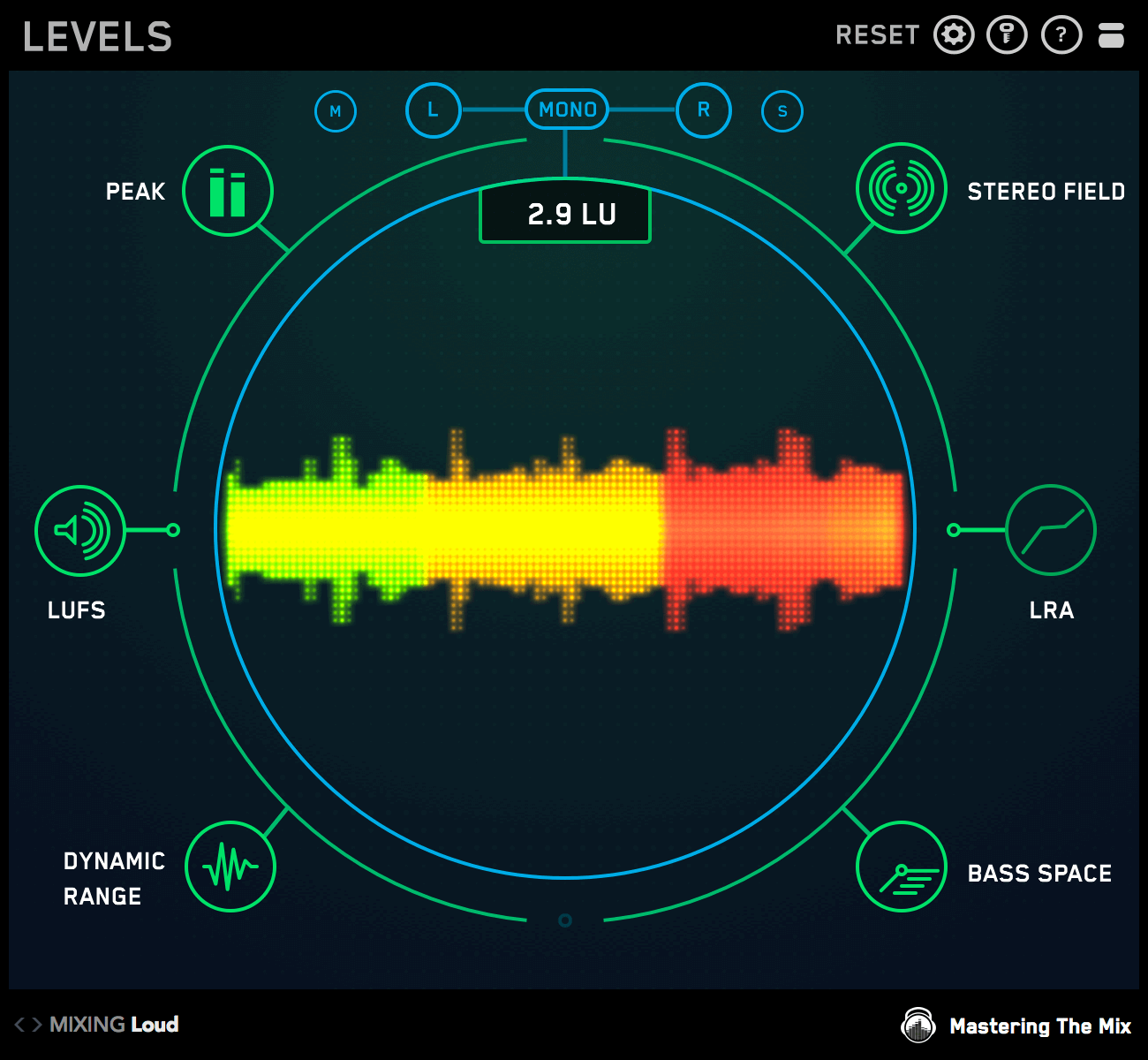
Mastering The Mix Levels Review
Beautiful dynamics, and adequate headroom for mastering work. The peak levels are irrelevant. Understanding “In The Box”I think we’ve reached a point where a majority of the mixes being done today are 100% “in the box”, meaning the audio stays 100% in the DAW and is not being captured from an analog stereo source such as an analog mixing console or summing box.100% digital “in the box” mixes are where the peak level becomes much more arbitrary. Again, you want to aim for a healthy level that isn’t so low that it’s near the noise floor of any plugins on the master fader that may produce some kind of simulated analog noise or hiss, but for the most part, as long as regular peaks are happening above -20 dBFS, this will be fine for mastering from.The thing to avoid with digital mixing entirely in the box is sending in mixes for mastering that have some form of peak limiting applied to the master fader. This could be anything from an actual peak-limiter, or perhaps a compressor or other type of plugin that creates a hard ceiling at 0 dBFS (or lower) and prevents what would otherwise be clipped peak levels from actually occurring. There are a few plugins that aren’t actual limiters that prevent peak levels louder than 0 dBFS to pass through which by doing so is likely painting your mastering engineer into a corner. Also, if you are planning to release the material on vinyl, this can be very vinyl un-friendly, and for the most part uncorrectable in the mastering stage.I can’t tell you how many times I have attempted to communicate this ahead of time to a mixing engineer and/or client only to receive mixes that are heavily peak-limited and/or clipped with no headroom for additional mastering.
An example of a mix that has already been heavily peak-limited, or is simply clipping the DAW mix bus and saved as 16 or 24-bit fixed point. Get adobe support advisor mac 10.11.6. Irreparable damage has been done and I often reject mixes like this when they come in for mastering, or at least ask for a better starting point which can usually be accommodated with proper communication.In most cases, following these 2 steps will provide a mix that is ideal for mastering:. Don’t allow peak levels to reach 0 dBFS. Don’t use a peak-limiter or other similar plugins that prevent peaks that would otherwise reach or clip 0 dBFS by creating a hard ceiling at or below 0 dBFS.It’s really that simple though somehow it manages to get convoluted and controversial. I’ve had people turn down what was a peak-limited or clipped mix by 6 dB and then send it in thinking that I can work with it.
I’m not sure why they think having them turn down a mix like that is somehow better or different than if I would do that on my end before I start mastering, but it happens.Yes, a mastering engineer can turn down a loud unmastered mix to a level they can work from, but they can’t undo the damage done from any peak-limiting or clipping, so that is why following those two steps is important. Once a mix is limited or clipped, the damage is done and can’t be undone. It also means that any additional analog or digital processing just ends up making it worse or marginally better at best. The audio is in a delicate state at this point. Although this mix is technically not clipping and the peak levels are at -6 dB, this mix has clearly hit a peak-limiter or brick-wall of some kind and is not an ideal place to start mastering from. This is false headroom.
Law Of AveragesAside from peak levels, what’s potentially more important to watch (and listen!) for on a mix being delivered for mastering is the average loudness. Average loudness used to commonly be measured in what’s known as “RMS” (Root Mean Square) but now it’s more commonly measured in what is referred to as “LUFS” (Loudness Units Relative to Full Scale). RMS and LUFS are somewhat similar in concept but LUFS factors for certain frequencies that are more (or less) sensitive to the human ear so LUFS readings tend to agree with the human ear better than RMS.There are three main ways LUFS are measured.
Integrated LUFS measurements measure an entire song or piece of audio from start to finish, and is often done in an offline process faster than real-time instead of playing the entire piece of audio from start to finish. Short-Term LUFS measures the average loudness but only looks at a 3 second window, so it will more closely follow the dynamics of a mix as it plays. Momentary LUFS is a very fast measurement that is somewhat explanatory in name in that it displays the loudness in real-time as the song or material plays. The numbers change very fast during playback.If I receive a mix that has an Integrated or frequent Short-Term LUFS reading of -13 LUFS or louder, usually some form of digital peak-limiting is being done to achieve that loudness and it’s not ideal for mastering from. Of course, if some heavy but skillfully refined compression/limiting on the individual busses within a mix is occurring you can achieve a mix with a high average loudness that doesn’t clip 0 dBFS or hit the ceiling, but most of the time when I get a mix at -13 LUFS or louder, some peak-limiting and/or clipping has occurred whether it’s intended or not.Back to peak levels though. If you are mixing in the box and have some occasional peaks that clip 0 dBFS, one option is to attempt turning down the mix in the DAW, but that can get tricky when FX sends that are post-fader are involved or there is other complex bussing and routing within the mix.The beauty of most modern DAWs is they allow for you to save a mix as 32-bit floating point or some even allow saving as 64-bit floating point and more will follow soon.Saving a stereo mix that clips your DAW mixer output as a 24-bit WAV will result in a waveform that has unrepairable damage to the peaks.
The peaks are sharply chopped off at 0 dB and that’s that. It paints the mastering engineer into a corner and is often considered not vinyl-friendly. Again, not a good starting point to master from. However, saving a mix that clips your DAW output as a 32-bit or 64-bit floating point WAV instead of 24-bit means that any peak levels that exceed 0 dBFS are actually preserved and the mastering engineer can effectively turn the level down to work with the mix and retain all the peak info for the mastering process. It’s a bit like magic. What looks like a brick-walled waveform at 24-bit suddenly looks (and sounds) like a useable mix at 32-bit (or 64-bit) floating point when properly gain staged.The GIF above demonstrates how even though the waveform initially looks to be peak-limited/clipped like the previous image, the fact that it was saved as 32-bit floating point by the mix engineer means that the peak levels are preserved when the level is reduced. This allows for useful mastering work to still be done without compromise.

Recorded Bit-Depth vs. Actual Bit-DepthOne point of confusion here is the difference between recorded bit-depth and the bit-depth of the processing done by your DAW and plugins. You can record something at 24-bit or 16-bit fixed point but as soon as any digital processing is done, the bit-depth will increase to floating point. Some DAWs and plugins work at 32-bit floating point and some at 64-bit floating point but the difference between the two is really spitting hairs.There is a called “” by that can help show you this. Insert Bitter plugin last on your master fader/bus to see the actual bit-depth of your audio stream which as mentioned can be different than the recording bit-depth setting you chose when setting up the recording or mix session.The main thing to take away is that if you’re not using a peak-limiter on the master fader and the peak levels are still hitting 0 dB now and then in your mix session, simply save the mix as 32-bit (or 64-bit) floating point and the peaks will not get chopped off as they would when saving as 24-bit WAV.
Everyone should have good intentions of never hitting 0 dB on the master fader of your DAW mixer when mixing, but in reality, the mix level can creep up as you work and you can run out of headroom. Sending Two Mix VersionsOne thing that has become common these days, at least for me, is to receive two versions of the mixes for a new mastering project. One version of the mixes has all the mix bus processing applied that was there during mixing and mix approvals.
Mastering The Mix Levels Mac
This helps me know what everybody is used to hearing in terms of loudness, dynamics, tonal balance, and other sonic aspects. Then I will also receive a version that has little to no processing on the stereo mix bus so I have a better starting point to work from. Almost 100% of the time this is what I use to master from.My general philosophy on mix bus processing before mastering is to turn off anything that adds loudness and leave only what is needed for the right tonal balance, dynamic range, character etc. If a limiter, multi-band compressor, or even a normal compressor is used to increase the average loudness only, get rid of it. If a limiter is catching peaks, get rid of it and trim the mix appropriately to avoid any naturally clipped peaks, or save your “in the box” mix as 32-bit float instead of 24-bit and preserve the peaks that way.Anything on the stereo mix bus that doesn’t affect the loudness such as EQ, saturation, etc.
That is essential to the sound should remain active for both versions. If you are in doubt if something is working well, it’s usually best to shut it off before mastering.The number #1 comment when I ask for a mix with the peak-limiting removed is that the mix will “fall apart” if the limiter is removed.